Germany turns its museums into a tool of cultural diplomacy
An agency linked to the Foreign Ministry funds exchanges and consulting to raise the profile of the country's lesser-known institutions.
Translated from the Portuguese original by the Panorama newsroom. Read in Portuguese
Summary written by the Panorama newsroom from the sources listed below. Facts are attributed to the original publications.
Beyond famous venues such as the Neue Nationalgalerie and the Pergamon Museum, Germany is home to thousands of little-known museums, and the country's government has begun using them as a foreign-policy instrument, a Folha de S.Paulo report shows.
According to the Institut für Museumsforschung, a body that researches the sector, the country has 6,673 museum institutions, which recorded 107 million visits in 2024. Data for 2023, however, indicate that 56.7% of them received fewer than 5,000 visitors and only 5% exceeded 100,000.
To raise that profile, the government created the Agency for International Museum Cooperation three years ago, attached to the Foreign Ministry. The agency funds exchanges of collections and experts with other countries, facilitates loans of works and touring exhibitions, and advises both municipal and state museums and foreign institutions that want to go international.
The agency's head, Silke Krummel, sees museums as spaces of "soft power," able to create bonds that go beyond economic and political exchanges, and as a force against chauvinism and disinformation. A survey by the same institute indicates that museums are among the institutions Germans trust most, behind only family and friends.
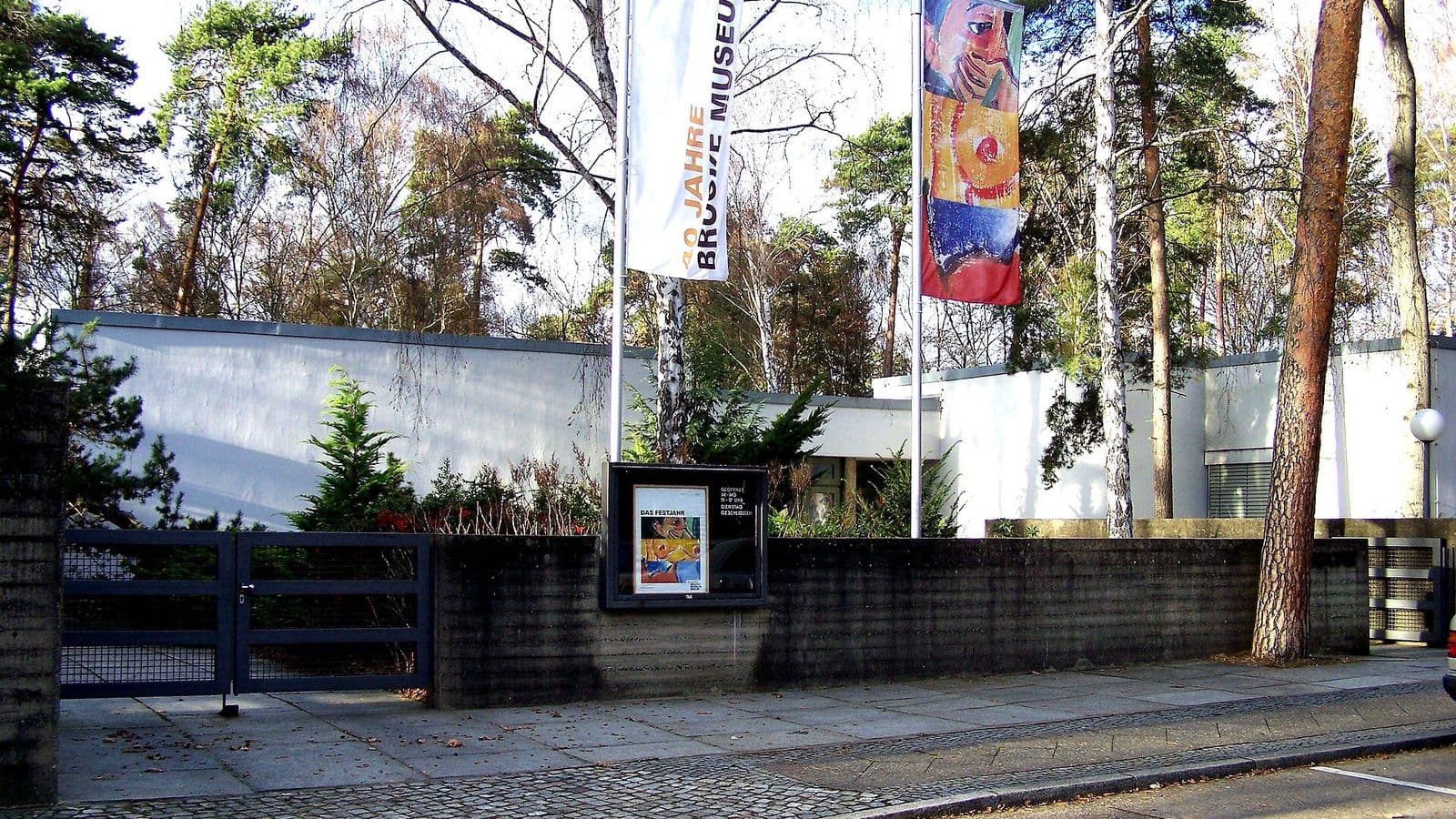
One of the examples cited is the Brücke Museum in Berlin, opened in 1967 and home to one of the largest collections of German Expressionism, with works by Karl Schmidt-Rottluff, Erich Heckel and Ernst Ludwig Kirchner. The report also recalls the debate over the repatriation of objects taken during the colonial period: Stuttgart's Linden Museum signed an agreement with Nigeria to return items looted in the 19th century.