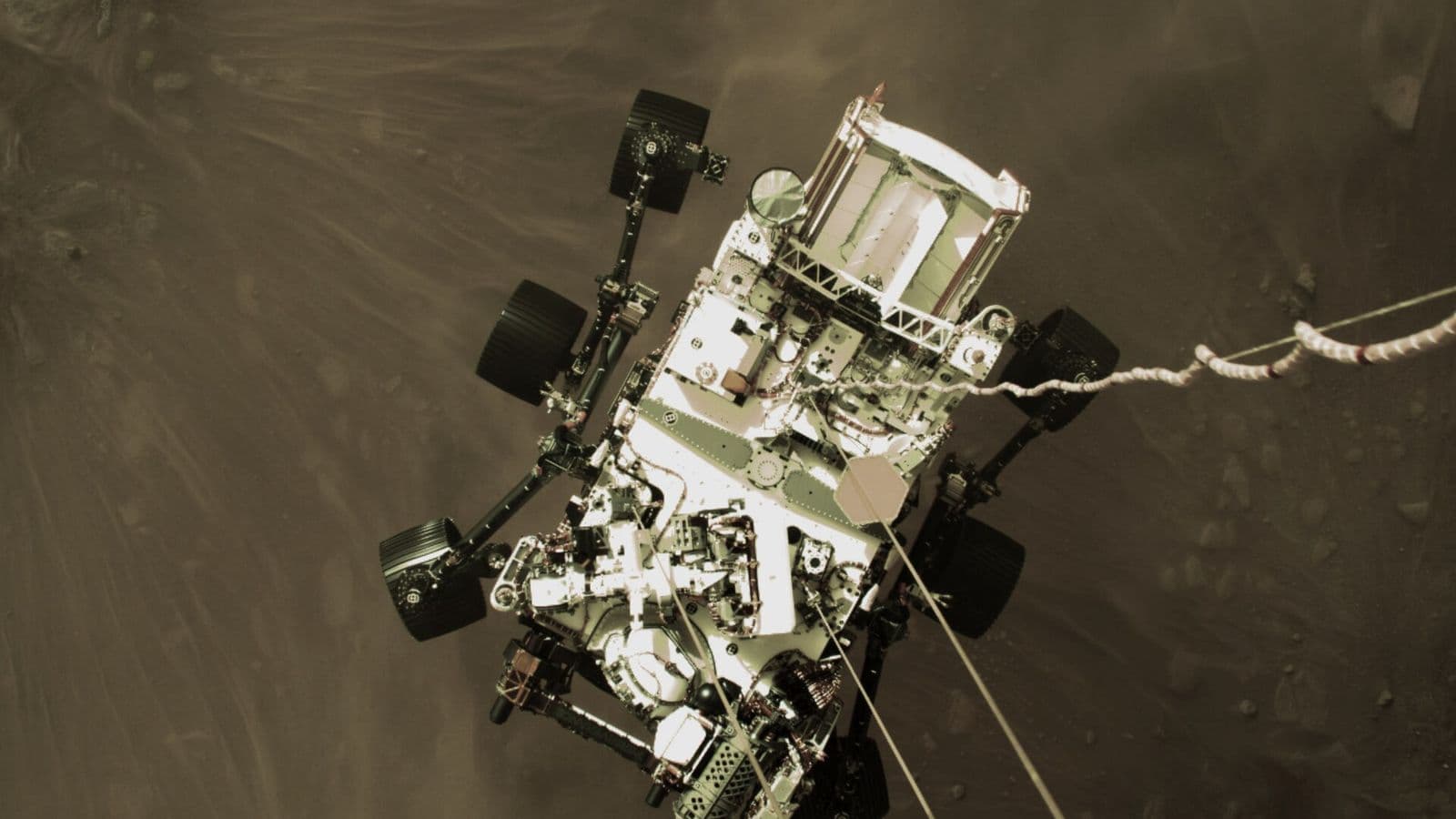
Perseverance detects the finest dust ever recorded on Mars
Particles of about 100 nanometers may pose a challenge for astronauts and for spacesuit design.
Brazil and the world in perspective.
English edition. Stories are translated from the Portuguese original; any story not yet translated is shown in Portuguese.
Brazilian research and scientific discovery.
10 storiesParticles of about 100 nanometers may pose a challenge for astronauts and for spacesuit design.
The object provisionally called 2026 ED138 may measure between 600 and 1,500 km and be among the largest bodies ever found in the region.
The observatory that detected more than 2,000 gamma-ray bursts ended operations after nearly 22 years in space.
The Lumina model tracks the first 2 billion years of the cosmos and produces fewer giant galaxies than the James Webb telescope has been observing.
Study in Science indicates that navigators from Rapa Nui were among the first to colonize Hawaii.
Study analyzed 967 human remains from at least 60 individuals and saw marks consistent with dismemberment, boiling and breaking for consumption.
The 66-million-year-old Infernogallus jamesi had no teeth and a parrot-like head.
Cambridge simulations indicate it would be rare for a comet to deliver a significant amount of hydrogen cyanide intact to Earth.
Astronomers see a never-before-seen structure around the white dwarf J1328−1450, possibly maintained by two bodies that survived the star's death.
The 237-million-year-old Gerrothorax maritimus had bony armor and gills; none of the more than 8,000 living amphibians is fully marine.