Supercomputer simulation recreates the 'childhood' of the Universe, but leaves a puzzle
The Lumina model tracks the first 2 billion years of the cosmos and produces fewer giant galaxies than the James Webb telescope has been observing.
Translated from the Portuguese original by the Panorama newsroom. Read in Portuguese
Summary written by the Panorama newsroom from the sources listed below. Facts are attributed to the original publications.
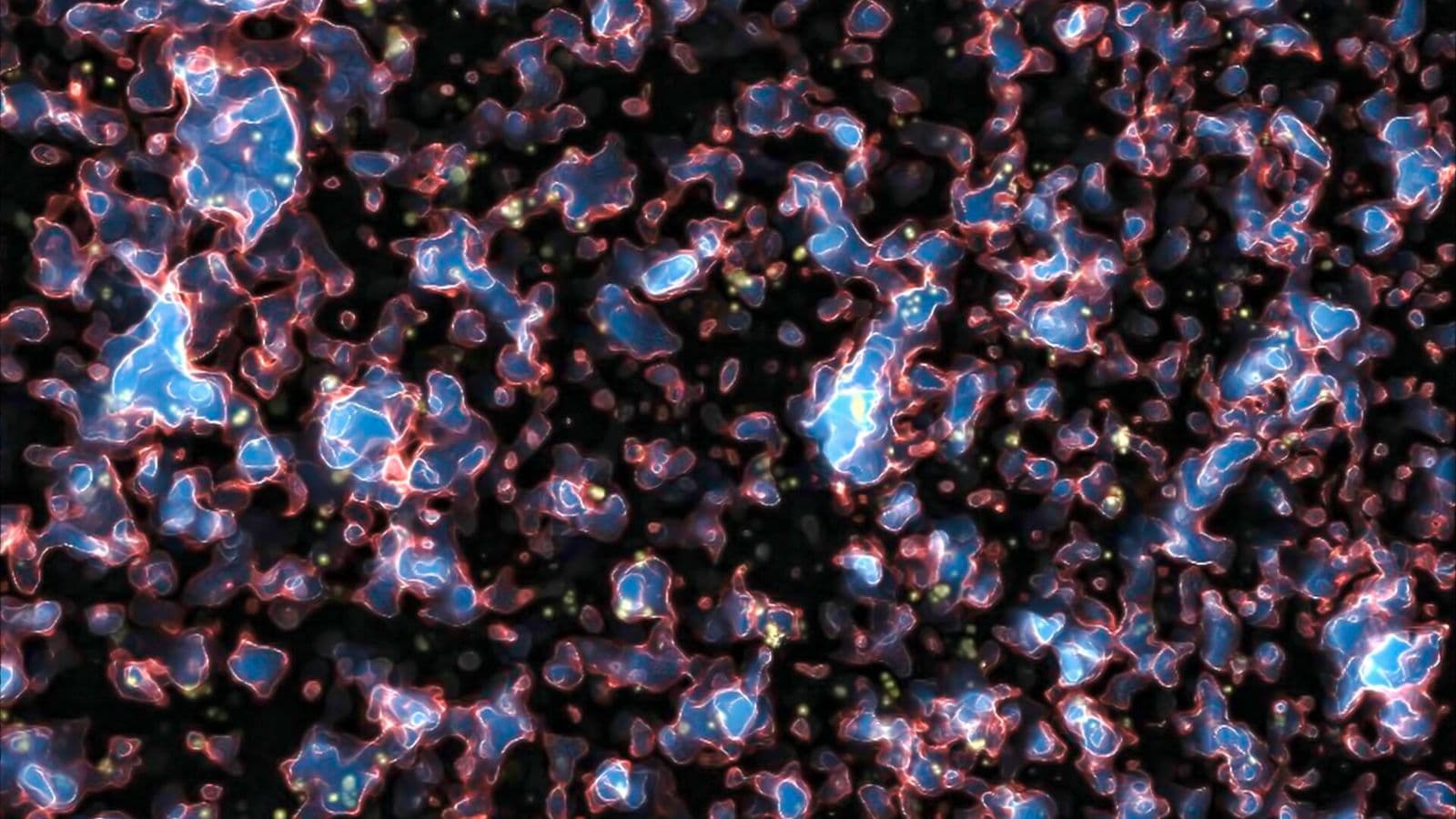
Astrophysicists released images showing how the Universe emerged from darkness shortly after the Big Bang. According to g1, they come from Lumina, a supercomputer simulation presented on Sunday (25) by an international group of researchers.
The scientists fed the machine the conditions of the cosmos just after the Big Bang, as measured by satellites, and let the laws of physics take over. The computer reproduced the evolution of the first 2 billion years: bubbles of light appear around the first galaxies, grow, merge and gradually dissolve the fog of cold gas that covered the early cosmos.
The recreated stretch of Universe is about 1.6 billion light-years on a side. The calculation tracked hundreds of billions of gas and dark matter particles and was run on Frontier, one of the most powerful supercomputers in the world, in the United States.
The work was published on Monday (26) in the Monthly Notices of the Royal Astronomical Society. The result agrees with much of what telescopes have already seen, but fails on one point: the simulated Universe has fewer giant galaxies than James Webb has been finding.
For the authors, this indicates that galaxies in the young Universe grew faster than current theories can explain.