São Paulo had 43,000 fewer bus trips per weekday in 2025 than in 2019, survey shows
Data from SPTrans obtained under the Access to Information Law point to a 23% drop in trips operated; City Hall says supply tracks demand.
Translated from the Portuguese original by the Panorama newsroom. Read in Portuguese
Summary written by the Panorama newsroom from the sources listed below. Facts are attributed to the original publications.
The number of bus trips operated daily in the city of São Paulo fell 23% between June 2019 and June 2025, according to a survey obtained by Folha de S.Paulo. On weekdays, the reduction amounts to 43,013 fewer trips per day; for night service, the drop reaches 47%.
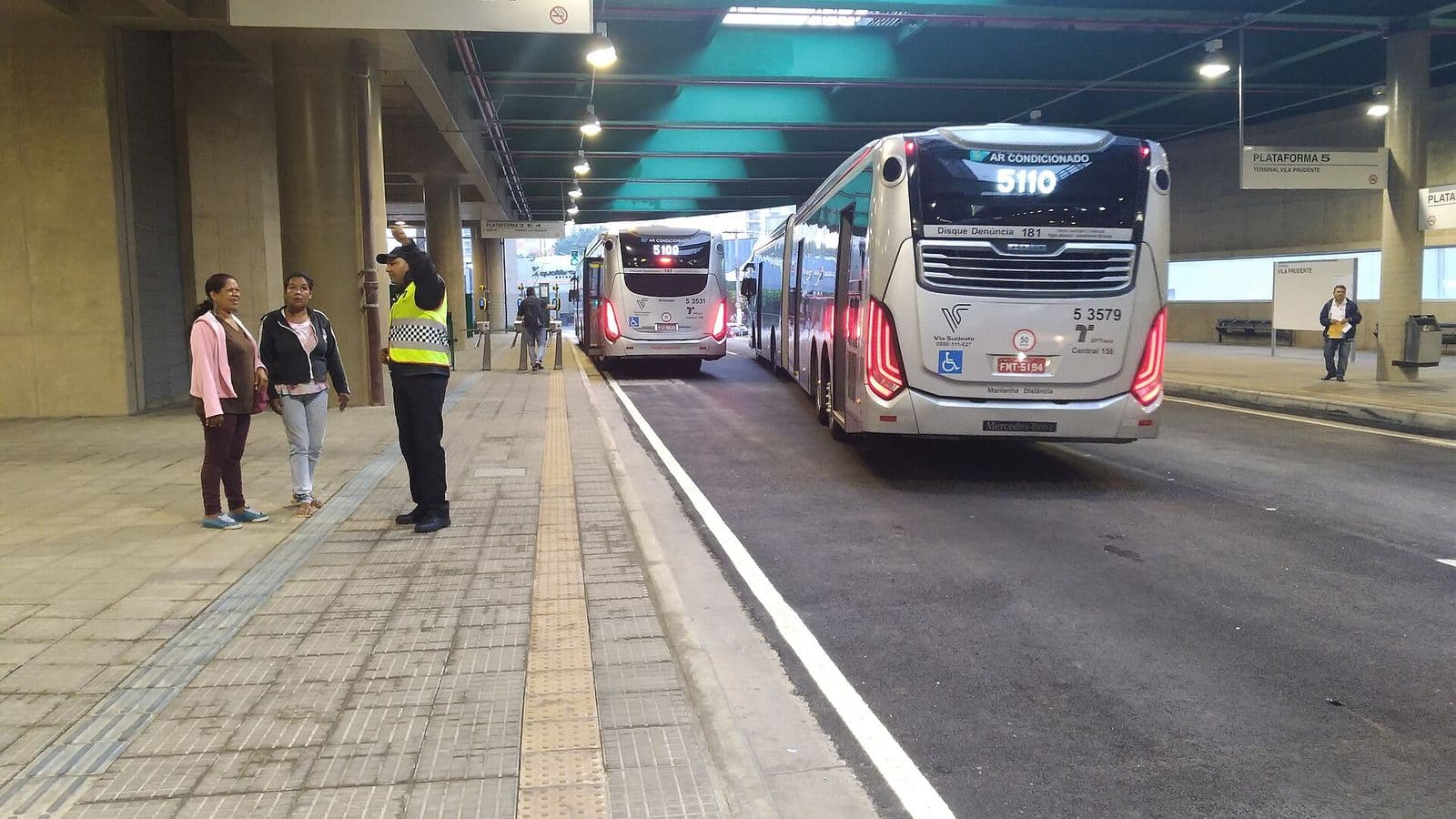
The comparison was made by the office of city councilor Nabil Bonduki (PT, Workers' Party) using data from SPTrans, the city-controlled company that manages the system, obtained under the Access to Information Law. Over the same period, the number of passengers fell 19.81% and the contracted fleet shrank 5.54%. The biggest drops occurred at the Vila Prudente (47%) and Casa Verde (45%) terminals; of 32 terminals, only Parelheiros saw an increase, of 20%.
The administration of Mayor Ricardo Nunes (MDB) said supply tracks demand and attributed the loss of riders to remote work and the expansion of the subway and rail network. According to City Hall, average weekday ridership fell from 9 million to 7 million, and the analysis would be mistaken for disregarding demand. The figures in its own statement, however, show that scheduled trips per weekday went from 175,162 to 157,811, a 9.9% decline.
Researcher Luiz Vicente De Mello Filho, a mobility specialist interviewed by the newspaper, sees direct competition from ride-hailing apps, which have become a complement to trips, and attributes the reduced supply partly to the difficulty of funding the service under an outdated contract model. Mobility specialist Rafael Calabria, for his part, says the reduced supply worsens the service and pushes passengers toward individual transportation.
In 2025, City Hall paid R$7.12 billion to bus companies in fare compensation, a subsidy that covers the gap between the fare and the cost of the service, according to SPTrans's annual report.