Flávio Bolsonaro tells the Washington Post that Nunes Marques doesn't know what he's talking about on the election
Without presenting evidence, the senator defeated in the runoff again raised suspicions of fraud and said he needs to regularize his immigration status in the US.
Translated from the Portuguese original by the Panorama newsroom. Read in Portuguese
Summary written by the Panorama newsroom from the sources listed below. Facts are attributed to the original publications.
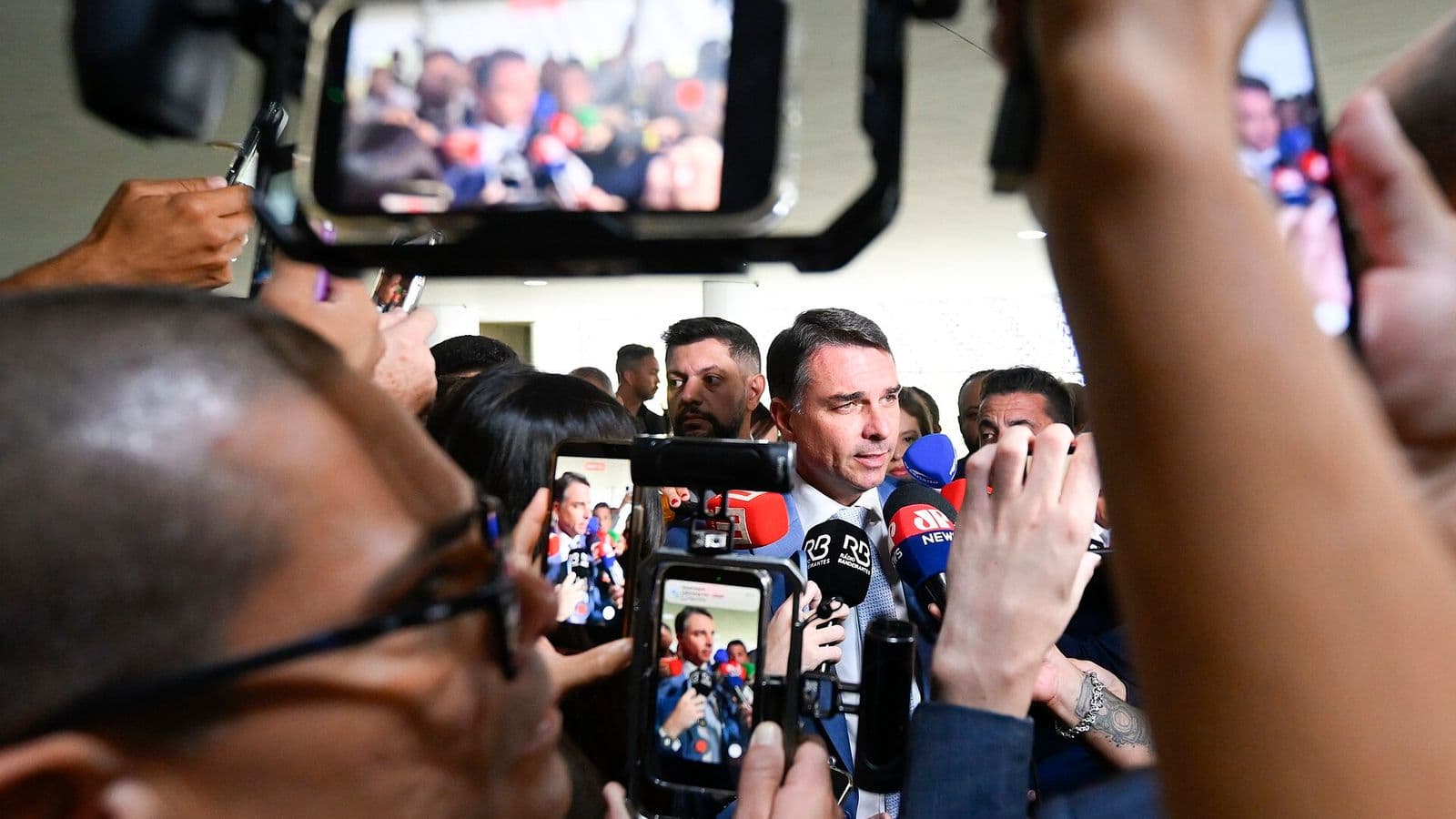
Senator Flávio Bolsonaro (Liberal Party, PL, Rio de Janeiro) told the American newspaper The Washington Post that the president of the TSE (Superior Electoral Court), Kassio Nunes Marques, does not know what he is talking about when he says Brazil's elections were fair and when he recognized the victory of President Luiz Inácio Lula da Silva (Workers' Party, PT), according to an account by Folha de S.Paulo.
Defeated by a margin of 4.4 million votes in the runoff, Flávio repeated to the Post, without presenting evidence, the claim that there was fraud, arguing that no one could guarantee with complete certainty that it did not happen. Nunes Marques confirmed Lula's reelection on the night of October 25, after the count, and called both candidates to inform them of the result. The justice was appointed to the Supreme Court by former President Jair Bolsonaro (PL), the senator's father.
Flávio received the reporters at a coworking space in Aventura, north of Miami, Florida. He said it was too early for definitive decisions and that his priority now is to regularize his immigration status. He again refused to reveal the route he used to leave Brazil.
The Post cited a source in Brazil's security sector who, speaking on condition of anonymity, said police are investigating whether a network of American, Argentine and Israeli agents helped the senator leave the country.
In the interview, Flávio said one of the reasons for going to the US was to be able to maintain the fraud claim without fear of being arrested. He also said US President Donald Trump is convinced that Brazil is no longer a full democracy, and he compared the path of his father, sentenced to 27 years in prison for attempting a coup, with that of Trump, who returned to power, to argue that Brazilian institutions have stopped working.