Gas detected over Martian volcano hints at volcanic activity beneath the surface
The European ExoMars TGO probe recorded spikes of hydrogen chloride over Alba Mons; the hypothesis still needs to be confirmed
Translated from the Portuguese original by the Panorama newsroom. Read in Portuguese
Summary written by the Panorama newsroom from the sources listed below. Facts are attributed to the original publications.
Data from a European Space Agency (ESA) probe indicate that Mars may still have volcanic activity beneath its surface, according to a study published on Wednesday (4) in the journal Science Advances and reported by g1.
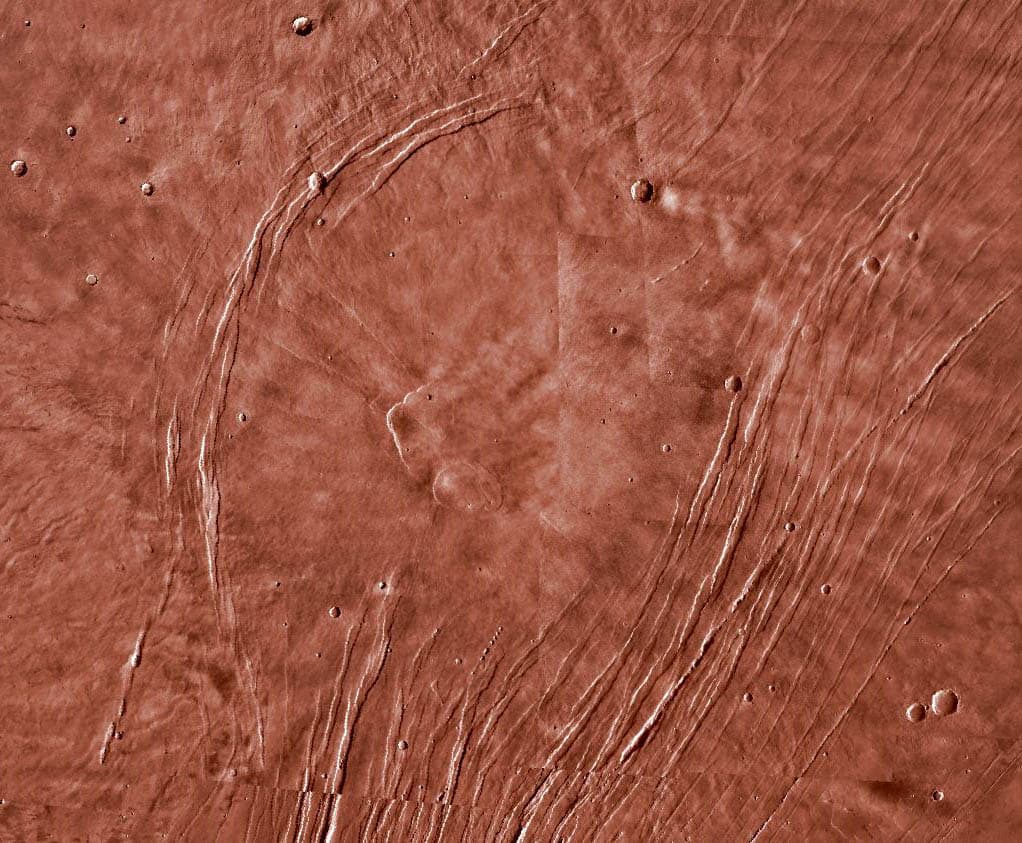
The main clue is hydrogen chloride detected by ExoMars TGO, which orbits the planet analyzing atmospheric gases, above fissures in the Alba Mons region, one of the great Martian volcanoes. The probe had already identified the gas in 2021, but its variations were attributed mainly to dust and water cycles. This time, the spikes appeared at the start of northern-hemisphere summer and always over the same area.
Images of the site showed narrow fissures, some hundreds of meters long, and changes in surface color. The researchers' hypothesis is that gases from a dormant magma chamber rise through these cracks, as happens in volcanic regions on Earth. In winter, with temperatures of around -120°C, ice would block the passages, which would reopen through sublimation in summer.
The authors stress that no recent eruption or lava flow has been directly observed and that the volcanic origin of the gas is still a hypothesis. Other evidence, such as marsquakes recorded by surface missions and volcanic areas that appear to have been active a few million years ago, had already suggested that the planet is not geologically dead.
If confirmed, the finding could guide the search for life: magma could heat underground water and create warm, moist environments, shielded from the extreme conditions at the surface, considered promising places to look for signs of microbial life.